


Calcalist, Amitay Gazit, 21.10.2020
The Tel Aviv District Committee last month halted the Bnei Brak municipality's intention to collect improvement levies on TAMA 38 projects, even though the planning laws exempt such projects from the improvement levy. The Bnei Brak municipality is now seeking further discussion of the decision, with unexpected assistance from three mayors Shama HaCohen, Mayor of Ramat Gan, Moti Sasson, Mayor of Holon, and Liat Shochat, Mayor of Or Yehuda - who are themselves members of the District Committee.
The dispute between Bnei Brak and these three cities and the district committee on behalf of the Ministry of the Interior is another expression of the difficulty of municipalities in agreeing to TMA 38 projects, which add residents to the city and do not generate sources of income that will allow the construction of educational institutions, public areas and other infrastructure.
According to the national plan to strengthen buildings against earthquakes, in NOP 38 a building that is being demolished and rebuilt can be added 1.5 to 3.5 floors depending on the height of the building destroyed, and this addition is exempt from the improvement levy to the municipality. Only one as part of the TAMA of demolition and reconstruction, and an additional floor and a half will be possible only in a relief procedure - in which the municipality can charge the developer an improvement levy of 50% of the value of building rights. This is an original "patent" that allows the municipality Which burdens the system only to allow the municipality to collect more tax.
 Avraham Rubinstein, Mayor of Bnei Brak. Attempt to put money into the public coffers
Photo: Shuki Lerer
The district committee blocked this intention and forced Bnei Brak a plan that allows for the addition of 2.5 floors to a building that was originally 2 floors and an addition of 3 floors to a construction that was originally 3 floors high, without an improvement levy. However, the district limited to 1,000 the total number of apartments that can be built under this plan, because the Planning Administration is working today to formulate a new policy instead of TAMA 38. After 1,000 apartments receive a permit, the municipal plan will be re-examined in light of the new policy. The district committee's decision was ratified on September 14 by a subcommittee on objections. In its reasoning, the committee explained that "this move will create certainty and transparency and is in line with the Planning Administration's policy, which advocates the abolition of the relief mechanism."
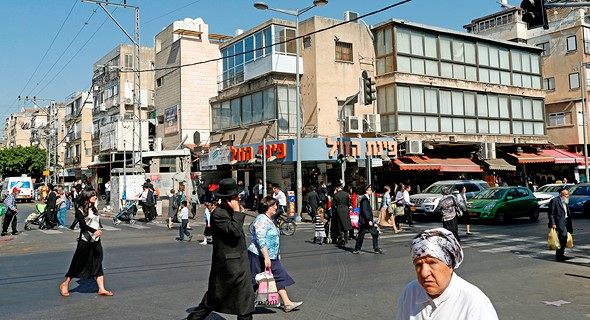 Bnei Brak. An approved section requires the conversion of ground floors in TAMA 38 projects into public space Photo: Amit Shaal
But the municipality of Bnei Brak does not intend to give up easily, and has already managed to recruit three members of a district committee for a request for a retrial, as stipulated in the regulations. The mayors of Ramat Gan, Holon and Or Yehuda note in the letter that "the committee has not examined the direct implications of the decision, which will significantly increase the expenses of the public coffers, which in the current period are depleted anyway, without creating a source of income against them. "Including the need for subsistence and independent economic balance, and a significant burden of additional apartments should not be imposed on it without it being able to provide an appropriate solution."
A clause that has been approved in Bnei Brak's new plan, and is a national precedent, requires the ground floor of any building that will undergo demolition and construction into a public area, such as a kindergarten, daycare center and the like. In recent years, specific plans have been approved in several cities, especially in Tel Aviv, in which space has been allocated for public purposes inside a building, but this is the first time that a plan that applies to the entire urban space requires such an allocation.
The district committee noted in this regard: "The plan allocates areas for public use in the heart of the city, areas in the absence of which projects cannot be approved for NOP 38, since Bnei Brak, which is the most densely populated city in the Tel Aviv metropolitan area, is in short supply.