



Calcalist, Amitay Gazit, 20.10.20
More than NIS 1.5 billion, this is the cumulative estimated value of three new construction plans in the Old Station complex in Jerusalem, which will be discussed today before a deposit in the Jerusalem District Planning and Construction Committee. The three plans include more than 600 apartments, a sheltered housing unit, offices and hotel rooms.
The biggest beneficiaries of their expected approval are the rights holders Erel Margalit; Rami Levy and his partner Avraham Murdoch; And the State of Israel, which has the rights in the third and largest complex of all. Another holder of rights is Amishragaz, whose separate plan will probably be in place in the coming months.
The plans that will be discussed are a large portion of a 75-dunam area between Hebron Road and Bethlehem Road in Jerusalem south of the city's first train station complex. There are currently several warehouses and three buildings for preservation in the area.
The area of Erel Margalit is adjacent to the south of the complex where the JVP fund under his management operates, and it covers 17 dunams. The landowner is the Greek Orthodox Church. In 2010, Margalit signed a 99-year lease with her, under which he paid $ 8.4 million in several installments by 2013.
Under the agreement, 12% of the building rights in the new plan will remain in the possession of the church. The plan that Margalit promoted will build 220 apartments on a built area of 23,000 square meters and offices in a built area of about 10,000 square meters, as part of the Margalit Startup City Jerusalem, an entrepreneurial and innovation district he is establishing. The appraiser Kobi Bir estimates that the value of a square meter for living in this area is about NIS 20,000 and the value of an office square is about NIS 6,000, so that the rights of Margalit and the church will be worth about NIS 500 million, before taxes and improvement levies.
Rami Levy and his partner Avraham Murdoch have an area of 13 dunams that they bought from Delek Real Estate, among others, in several transactions since 2006. According to the Tax Authority, they paid NIS 56 million for the area. In the plan, they want to build about 200 apartments, 116 hotel rooms and Trade and employment in the amount of 11 thousand square meters built. According to Bir, the value of the rights will reach NIS 300 million, before taxes and the improvement levy.
The state is promoting, through Naama Melis Architects, a plan for 200 apartments and about 200 sheltered housing units on only half of the land it owns. This is because in recent months the possibility of building an underground train station in the second half of the lot has been examined.
Although the complex is in the heart of the city, close to the Old City and close to sought-after neighborhoods such as Talbiyeh, the German Colony and the Jordan Valley, its redesign took years. The Jerusalem 2000 master plan was presented to the public in 2004, never deposited, but it was determined for the first time that the area was intended for redevelopment. However, the rights holders were unable to reach agreements and promote a joint plan. Finally, the Israel Land Authority, through the architectural firm Naama Melis, prepared a master plan that set out the planning principles for the complex, and this was approved in September 2019.
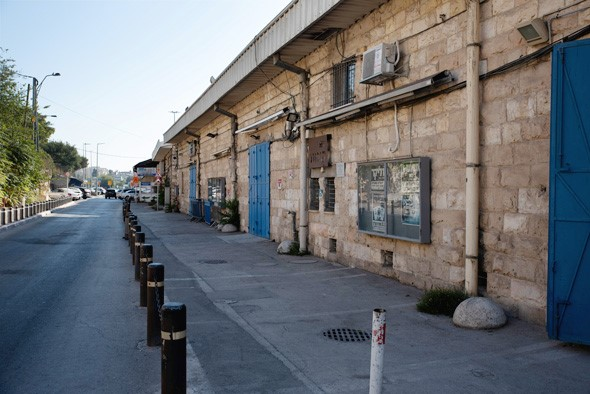 The station complex in Jerusalem Photo: Shalom Shalom
To avoid controversy, it was unusually decided to adapt the design to the ownership structures in the plots so that each of the rights holders could promote a separate plan. Therefore, it was determined that 35% of the land for public purposes will be expropriated in the same way from each plot. It was also determined that the scope of construction in each lot will be 350%.
The maximum height of the buildings will be 10 storeys, although the complex is near the axis of the light rail, and the policy of the Planning Administration is to intensify the construction adjacent to the axes of mass transit. The scope and height of construction in the complex was decided to be limited, to the disappointment of the rights holders, due to its proximity to the Old City.