



The Marker, Hadar Horesh, 28.06.2020
The urban renewal sector appears to be the central goal of the state when it comes to the real estate sector in the Arrangements Law. This is partly due to the lowering of the consent level required for demolition and construction projects, and a tender exemption for supplementary land required for such projects.
It is also evident that the authorities will be able to charge a higher levy on urban renewal projects. Another line concerns the metro project , which is estimated to cost about NIS 150 billion, around which the state is expected to allow landowners to receive increased building rights - but at the same time collect a special improvement levy, as well as expropriate land for the national infrastructure project.
One move that is expected to die is a cost-per- dwelling plan that has been at the center of the previous government's housing policy but is expected to be completed during the year. The Ministry of Housing is expected to propose an alternate program for those eligible for government assistance programs over the coming weeks - and the eligibility criteria will also not change. Shifting the billions invested in the program is expected to be used by the state in favor of the new moves.
A cost-per-plan plan cost the country about NIS 4 billion, but it had no real impact on housing prices. Despite informal assessments that the plan is expected to undergo significant changes, the Israel Lands Authority (RAMI) continued to market to developers of apartment sales projects under the plan.
As of the beginning of the year, 14 public tenders totaling 3,396 apartments have been published. Published and not yet closed tenders can be rejected and canceled, but contractors have closed tenders totaling approximately 4,000 apartments, which the state is still obliged to market under the plan. Therefore, the lotteries are expected to continue even after the program ceases.
The cost of money for the resident - for urban renewal
One of the mines that the state has failed to neutralize in recent years is the "Urban Renewal Fund," which was due to be established in 2014. The money was supposed to be transferred to the IMF according to a complicated formula and regulations that were never signed by the Minister of Finance. The funding should also come from the cancellation of the land discount granted by the PMI to date as part of a cost to the resident.
The fund will help fund the agreements the state plans to sign with local authorities to promote urban renewal programs. Movements to promote the construction of evacuation complexes involve a great deal of investment in infrastructure, and many authorities have announced delays in implementing the programs from lack of funding to expand the required infrastructure (such as educational institutions, roads, sidewalks and urban gardens).
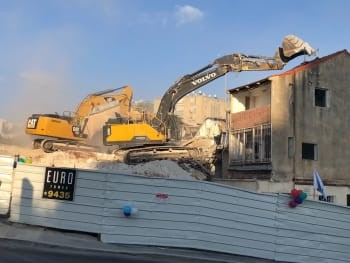 Demolition of buildings Photo: Haifa Municipality spokeswoman
Another means of financing the required infrastructure is to increase the rate of improvement that local authorities can charge for building new apartments beyond the number included in the exemption from the permit. This means increasing entrepreneurial costs and reducing profitability in construction add-on projects. On the other hand, the law would offer relief to entrepreneurs who would have to expedite construction of urban renewal complexes within a predetermined schedule. Among other things, REMI can allocate to these entrepreneurs supplemental land in expedited procedure with a tender exemption, at a price to be determined by the appraiser.
The Arrangements Law will also include easements initiated by the Justice Department in approving urban renewal projects through demolition and construction. The rate required for tenants to agree to such programs will drop from 80% to 66%, and program developers will be able to ignore the objections of residents of construction offenders. The plans offer residents new enlarged apartments or additions to existing apartments with an average size of about 12 sq.m. To torpedo urban regeneration programs.
Expropriations and real estate taxes alongside the metro stations
Real estate investors who rushed to buy plots in proximity to the planned metro stations would have to pay the state hundreds of millions of shekels under a special tax, as well as transfer some of the building rights on their territories to the state. Will be formulated in the new Arrangements Law, which the Ministry of Finance intends to bring to the Knesset's approval at the same time as the state budget.
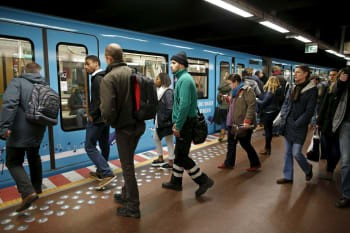 Passengers at a central metro station in Brussels. When in Israel? Photo: Reuters
The metro is the largest and most expensive transportation system designed in Israel and is estimated to cost about NIS 150 billion. The system will connect the center of the state, between Rehovot and Raanana, with high-speed rail lines to transport hundreds of thousands of people a day. The system will include about 100 stations, including about 30 intersection stations between lines, which are expected to coordinate huge demand for real estate.
Construction near the stations will be based on a huge tower in mixed uses of commercial, office and residential, and land value is expected to jump billions of shekels. The special planning around the metro stations was discussed by the planning committees as part of the special outline plan "TAMA 70", which has not yet been deposited.
The Finance Ministry explains that the rise in land value as a result of the government initiative justifies the special tax collection on landowners, and the proceeds will help fund the metro project. The treasury wants to determine that the state will collect part of the consideration in real estate areas. The special area around the station, where the increased tax can be collected, will be defined in regulations signed by the Minister of Finance, and will be limited to a radius of approximately 500-1,000 meters around the station.
According to the Finance Ministry, "it will be necessary to ensure that the planned projects in the stations area are developed quickly. We want to avoid as much as possible development delay as a result of disputes between entrepreneurs, inheritance disputes, business mistakes and the like.
The property tax is not expected to change
During the preliminary discussions on the Budget Law, the Treasury sought, in conjunction with the Interior Ministry, to implement a dramatic reform that would affect the realization of state-wide construction plans, the housing market and every family's spending basket: municipal tax reform. Following the reform, which is still in the initial stages of discussion, property tax on households is expected torise by tens of percent, while property taxes will be reduced. In order to mitigate the expected blow to households, the Ministry of Finance planned to raise municipal taxes over a number of years, starting in 2021.
Municipal property tax rates are considered to be loss-making for the local authorities: The cost of municipal services is about NIS 3,000-5,000 per family of the amount paid. The gap in government budgets has been closed through high and "profitable" property tax collection from businesses and balancing grants that the government pays to municipalities.
According to the Treasury, "The system creates large social gaps between authorities in many areas of business and employment centers, and localities that need to be based on property taxes and government balancing grants. In trying to close these gaps, many employment and trade zones have been planned in many communities, but this is an ineffective and useless allocation. That the state has no need for such a large amount of such land. "
Now, it seems that the municipal tax reform, which has been largely debated in the past year between the Treasury Department's staff and the Ministry of the Interior, is expected to be postponed until at least the next budget hearings. This is mainly due to the political difficulty involved in such a significant increase in family expenses during a difficult economic period.