



The Marker, David Lefler, 31.05.2020
Ahead of the expected changes in the planning world, it is appropriate to focus on the key issues that will determine the state of the state in the decades to come. First, we must agree that effective utilization of land is the supreme principle of a dense country such as Israel, which enjoys exceptional demographic growth compared to Western countries. In light of this, the two main areas where a significant policy change is needed are urban renewal in the periphery and residential construction in the rural sector.
In the southern and northern districts especially, informed crowding of the old cities is required through urban regeneration . Since there is no need to convince the enormous benefits of urban renewal, the barriers to realizing this process must be concentrated in the peripheral cities, and especially the low value of land (compared to the center cities), which requires supplemental land allocation. Complementary land is a compensation that can be given to the urban renewal entrepreneur to supplement the number of housing units that will bring the renewal project to the brink of economic viability. The only effective way is to allocate supplemental land as an integral part of any regeneration program.
The problem is opposition from the Israel Lands Authority (PMI) to the required allocation, while demanding a separate and detached process from the renewal program. This approach results in the entrepreneurs' uncertainty about the proceeds they will receive for the renewal. This block must be resolved by law or regulations, so that any entrepreneur can To plan urban regeneration knowing what the benefits will be, the bitter reality is that there are almost no regeneration programs in the periphery, and all factors must change this reality.
In the countryside, things are more complicated. Here it is clear that there is no effective utilization of residential land (without regard to agricultural land) and I have nothing but to quote the famous phrase from the movie peeps - "upside down, gutta, upside down". Instead of restricting residents to a maximum of residential units, we need to change access and encourage flooding, just in the way that construction congestion in cities is encouraged.
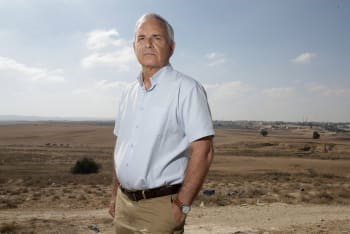 David Lefler Photo: Ilan Assage
The state should offer economic incentives to landlords who will build 6-8 units instead of 2-3 currently allowed. In this way, tens of thousands of housing units in the rural sector can be added, equivalent to the establishment of another city in Israel. All this while maintaining the rustic texture and a certain compromise regarding the rural landscape of small buildings with red roofs. Quite a few kibbutzim have existed for decades and no one thinks that these kibbutzim, like Yagur and Afikim, have lost the scenic uniqueness that we all love.
Policy change in these two areas - urban renewal in the periphery and the buildup of construction in the rural area - will yield tens of thousands of housing units, prevent the need to spread to the open areas and provide a proper planning solution for the housing shortage in Israel.
The writer is the chief executive of the Ministry of Economy, formerly chair of the Southern Planning and Construction Committee.