



Globes, Eric Mirowski, 16.05.2020
The full impact of the Corona epidemic on the housing market has not yet begun to emerge, except for a natural contraction of the volume of transactions, but the CBS data released Friday gives a glimpse into the reality we would have expected had it not been for the plague. By 2020, there was a good chance of wiping out all the Treasury's achievements. And bring back the rate of increase in house prices to that of five years ago
According to CBS data, in the first quarter of this year, Israelis paid the highest average price ever for an apartment - NIS 1.6 million. This is despite the high rate of sale of apartments in the "Price per dwelling" price. The government plan, up 3% from the beginning of the year.
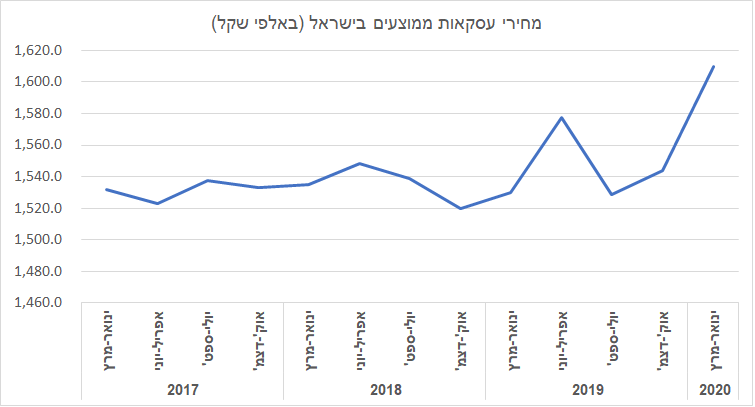 Source: CBS
In addition, in the first quarter of the year, the housing price index jumped by almost 2%. This is an almost 8% annual rate, just like that of 2015, when Moshe Kahlon began his tenure as finance minister.
Prices have risen in Jerusalem and Ramat Gan, in Netanya
For the first time, CBS is publishing housing prices in 16 major cities according to size, in accordance with the recommendations of the Housing Data Improvement Committee, about three years ago.
For example, in Beit Shemesh, average house prices rose 18% between April 2019 and March 2020; In Ramat Gan, house prices rose 11.2% this year, to an average of NIS 2.19 million. House prices in 4.5 to 5 rooms were up by 12%; Both neighboring Holon and Bat Yam have seen average apartment prices rise by about 10% over the past year.
Of the three major cities, Jerusalem stands out, with an increase of 8.3% in the price during the year measured. Prices in Haifa rose by 7.7%, while in Tel Aviv a relatively moderate increase of 3.4%. However, there were also price declines. Netanya saw an average price decrease of 4.2%.
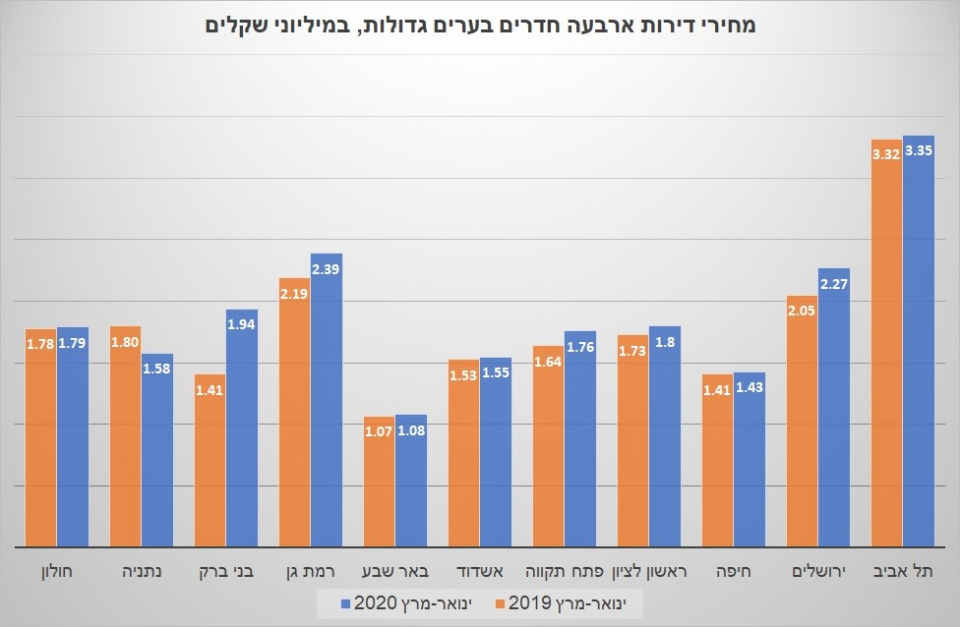 Source: CBS
Publishing this data is a very important advance, but there is one heavy concern - the size of the sample. In some types of apartments included in the review, very small quantities of apartments were made, not much more than ten, and therefore it is difficult to draw too deep conclusions from them; In places like Kfar Saba, Bnei Brak, and Bat Yam, less than 300 transactions were carried out in the first quarter of the year, making it difficult to know how reliable the information is; In places like Ashkelon and Beit Shemesh, many deals were made in this quarter, over 500 transactions, but most of them appear to have been done in new apartments (as part of the price per dweller, but not only), so the findings do not clarify what the real price levels are in these cities.
However, this is a valuable piece of information, which has been refined several years ago by the government appraiser, discontinued on the pretext that the statistics on housing prices should only be compiled by the CBS.
What is expected of us now?
The big question is what the real estate market now looks like and what it will look like after the Corona crisis. Chief economist publications in March indicate that the number of transactions in March was about 30% lower than those in February ; Record a historical low in the number of monthly transactions.
The Bank of Israel is expected to publish mortgage data taken in April and is expected to reach around NIS 5 billion. This is a big drop compared to March, when monthly mortgage records of NIS 8.8 billion were recorded, but this is still a high level of mortgages, especially given the situation. Accordingly, the real estate market is not dead. Bankers we spoke to explained that a large portion of the mortgages were taken by mortgage lenders who decided not to relinquish their homes and purchase them despite the uncertainty.
And what happens to transaction prices? Talks with appraisers and realtors indicate that very few transactions were actually made in April; Now in May, when a large part of the restrictions on citizens were thwarted by the plague, the pace of transactions accelerated, but no significant drop in prices was evident.
In general, the impact of the corona on the real estate market will be reflected mainly in the summer months data.