



Calcalist, Ronen Niv, 11.05.2020
The number of housing units in urban renewal programs approved last year has doubled compared to the previous year, to more than 26,500 - according to a comprehensive review published by the Government for Urban Renewal, published for the first time in a 2019 summary report.
According to the report, about 198,000 housing units around the country are currently undergoing various stages of urban renewal, of which 100,000 are in statutory processes, along with some 98,000 already approved, some of which have been granted building permits.
The Urban Renewal Authority emphasizes that 2019 was a record year when it comes to granting building permits - both in evacuation-construction projects (3,107 permits) and in the 38th TEMA projects (14,019 permits). That during the next two years there will be a real increase in the number of applications for the issuance of building permits by virtue of the TAMA 38.
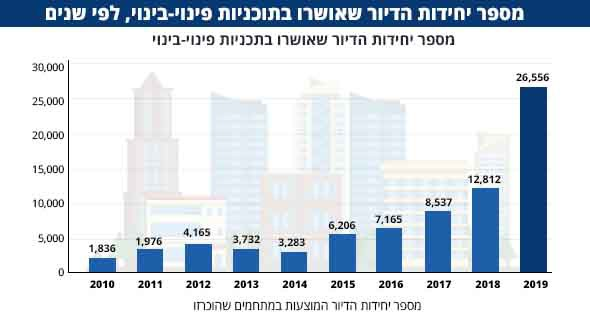
The report indicates that more than 70% of plans approved for evacuation in the past year were in the Central District (39%) and Tel Aviv (34%), compared with a small amount of plans approved in the Southern and Northern Districts. Rehabilitated plans for urban renewal are followed by Tel Aviv and Bat Yam - with approximately 12,000, 8,500 and 7,000 new housing units approved, respectively. Jerusalem ranks fourth with approximately 6,000 housing units approved in 19 areas. It is the leading city of approved housing units according to population size, with 5,204 new housing units in 14 complexes.
The top four cities for granting building permits for evacuation-construction projects are Kiryat Ono (2,126 permits), Yehud-Monosson (2,095 permits), Tel Aviv (1,955 permits) and Haifa (1,685 permits).
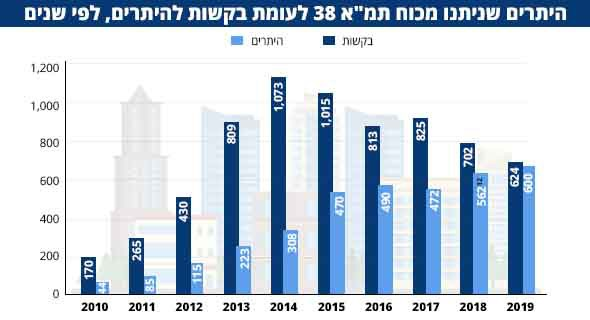
With regard to TAMA 38, the report indicates that the city in which the number of permits granted by the plan was granted in 2019 is Tel Aviv with 145 permits. The first five places are completed by Jerusalem, Ramat Gan, Holon and Haifa. Regarding the size of the population, those who rank at the summit are Ramat Gan, Tel Aviv and Givatayim.
During 2019, 21 complexes were announced in the modeled runway, some in the periphery. These complexes are being promoted to 35,759 new housing units, of which 27,734 are additional housing units. In this year, four plans announced in 2018-2017, including 18,602 new housing units, were approved.
According to the report, the rate of sale of apartments in urban renewal projects among all the new apartments reported to be sold to the Commissioner of Sales Law in the past year is 12.7%, and is about 2,859 apartments. Ramat Gan is the city where the most apartments were sold in urban renewal projects. Herzliya Haifa and Bat Yam.
Chairman of the Municipal Renewal Authority, Haim Avitan, commented on the report and said: "The impressive figures show that the government renewal authority's work is accelerating the city's renewal. Of the government. We continue to meet and even exceed the goals set by the government on the road to implementing the urban renewal revolution in Israel. "
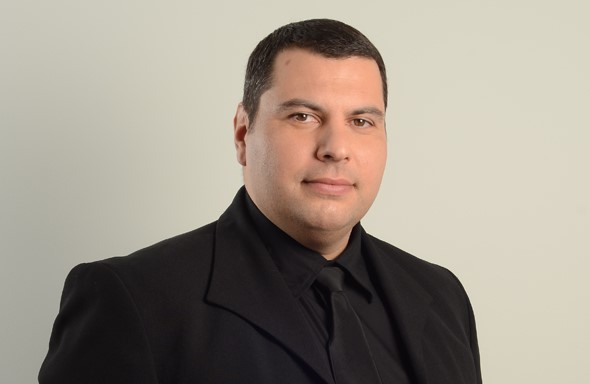 Adv. Emanuel Yuzhok.
A momentary awakening
Alongside the rise in urban renewal and the backdrop of the field, the major problems that have characterized it have always been prominent. "The data show that most of the action takes place in the plays Tel Aviv. What with the north and south? Name Quantity poor projects. Periphery residents are still waiting for the gospel of urban renewal," says attorney Ioz'ok, a partner at Iozok the Malkin , accompanying and advising In urban regeneration projects.
"The increase in the number of housing units approved in urban renewal programs last year is noteworthy, but it is still far from a complete solution to the needs. Reality shows that there are many old homes built in the country decades ago and today endanger their tenants and no longer deserve their housing. The sadness of the houses is also the threat of missiles and gloomy predictions about earthquakes, then the protection and renewal of the houses is clearly a necessity. "
Yuzhuk has trouble agreeing with projections to increase permit applications for TAMA 38 ventures, explaining that "It is true that the window of opportunity is closing, and apartment owners are well aware that those who do not operate now will miss the train - but it will not last long. Like other industries in the economy, even when it comes to urban regeneration the Corona has devoured the cards, many projects get stuck in traffic and have no horizon. Entrepreneurs are no longer rushing into TAMA 38 projects and lowering gear, so I estimate that after the Tishrei holidays there will also be a gradual decrease in the number of applications. "
"If decision makers really want to take urban renewal forward, a series of steps are needed, most notably the streamlining of bureaucracy," emphasizes Yuzhuk. "The complexity and complacency associated with project initiation are the ill-fated of the field. In the current state of affairs, the processes facing the planning bodies take too long, too. For example, it may not take more time to build a 38/1 project than to build it.
"I also do not see a solution for thousands of buildings located in crowded areas in the city centers, which cannot be included in evacuation-construction projects, but also do not fit with the 38/1 NMA. The only answer is the renovation of the buildings through the 38/2 TAMA, but many of the local authorities do not have any plans for this.
"Beyond that, the area of urban renewal must be accessible to all residents, so at the click of a button on the municipality's site they will be exposed to all the information and be able to know what the rights are in every neighborhood and every street. ".
Get in your pocket
Yuzuak welcomes the recently released report led by the Justice Ministry and seeks to remove barriers in urban renewal proceedings, but stresses that the toolbox for addressing the recalcitrant and extortionate tenants needs to be expanded in TAMA 38 ventures as well: Residential tenants do not hesitate to file idle objections, with the goal only to prolong the legal process and delay the implementation of the projects.As many discussions have been rejected as a result of the Corona, it is clear that any further objections submitted will only create additional burdens on the system. Defaulters also through the pocket, and convey a message that a tenant has refused Ask thwart a project may have to pay substantial sums ".