



The Marker, Gili Melnicki, 04.05.2020
The Corona epidemic raised the plight of the elderly in Israel, defined as a risk group and vulnerable population, many of whom are living alone - and exposed one of the biggest weaknesses faced by third-year-olds: a lack of housing solutions that fit their needs. If not enough, this shortage is also expected to be exacerbated by the state's latest projections that by 2040, approximately 2 million people aged 65 and over (14% of the population) will be in need of solutions to meet their needs.
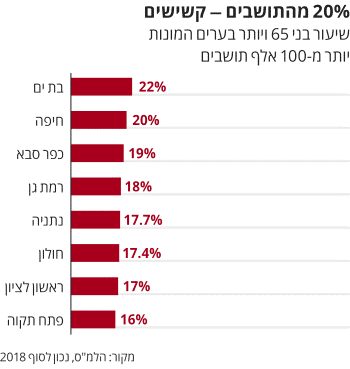
Today, 1.65 million adults aged 65 and over live in Israel - about 12% of the population. So far, the state has been content primarily with marketing land in the private market on which it will be possible to build sheltered housing, but it only serves about 13,000 adults, who belong mainly to the upper deciles and are able to pay monthly rent of NIS 12-20,000 for luxury sheltered housing.
Examination of the results of Israeli Land Authority (RMI) tenders for sheltered housing reveals that developers do not consider them economically viable projects: Out of 32 sheltered housing plots marketed in 2017-2020, only 16 were found winners, and the rest failed or not at all They approached them.
- "Being 65 doesn't mean I don't have a brain. I want to age differently"
-
Another solution promoted by the state is seniors' homes: In recent years, 118 public housing homes for disadvantaged elderly people supported by Social Security allowances have been built, along with a plan to improve living conditions and adjust apartments for disabled seniors in mobility. However, the program catered for only 1,200 seniors in 2018–2019.
"To date, the government has invested resources in adults primarily through programs to alleviate loneliness through welfare and community mechanisms, but a significant part of the solitude solution is in general related to the existing housing type and the lack of housing in residential neighborhoods," says architect Liat Izkov, a municipal renewal consultant on adult housing solutions. "The preferred option for adults is to continue living in their living environment, but if there is no elevator in the building or the neighborhood is isolated - they are in real distress."
"More than a therapeutic response"
A new pilot initiated by the Ministry of Construction and Housing seeks to adapt the public space to an older population in three existing neighborhoods that are in the planning of the office: the Jehoshaphat neighborhood of Arad, the Kammon Tsof neighborhood in Carmiel and the engagement neighborhood in Hadera. Together with the Ministry of Social Equality and Dr. Rinat Ben Nun, an expert external consultant in the field of adult planning and housing, the planning teams are working on creating a planning toolkit for the welfare of tenants that is expected to be published by October and will apply to all future plans coming out of the office.
-
Liat Isakov Ben Shitrit Photo: Asher Ben Shitrit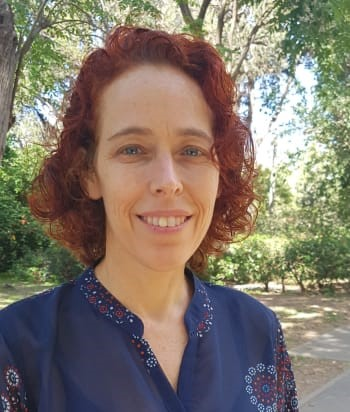
-
"We are designing new neighborhoods to ensure family absorption, but we have realized that the aging population is insufficiently responsive," says Chief Architect of the Ministry of Construction and Housing, Vered Salomon, who was a member of the Elder's Strategic Program for Seniors led by the Eshel government. "The generation of parents wants to stay in neighborhoods where they live, but with five or six empty rooms in the home, their loneliness is only increasing and maintenance costs are high. Neighborhoods that will include a variety of ages will be better and more communal. The older population has social value, which is not just therapeutic or nursing. "
Apart from the construction of small apartments, planning for the third age requires drafting principles for the city (city building plans) so that it can be embedded in the plans and not be interpreted as empty statements. "We are thinking of defining plots with special characteristics, such as common areas that can serve as a meeting point, for example. Laundry room or shared social space. At the same time, small apartments should be located close to medical centers, "says Salomon." If the GPO and regulation are adjusted and updated, developers will develop the construction for this population. The possibility of granting discounts on the land, as well as economic incentives to facilitate cooperation with funding bodies, is also considered. Significant. "
12.5 thousand apartments for "special housing"
"Plots for sheltered housing do not adequately respond to adults and are best suited to the upper deciles. The state must provide a solution in existing neighborhoods for the middle class as well."
The pilot initiated by the Ministry of Housing largely corresponds to a research approach where loneliness is the "third-year epidemic." Many countries have already implemented Ageing in Place models, which allow adults to grow old in their residential neighborhoods. A study conducted by the Ministry of Social Equality in 2018 reveals that about 93% of 65 and over live in their homes, and many want to continue living in an environment that will encourage their independence, allowing them to stay even if they become disabled in traffic.
Less than a year ago, PMI set a target of marketing 12.5 thousand apartments for special housing in 2019-2021 across the country, as part of a landmark change in perception. "We realized that protected housing plots do not adequately address the needs of the elderly population because the self-employed do not want to be Are classified as nursing, and avoid sheltered housing projects that fit the upper deciles, "says Rafi Elmalih, head of the Planning Department at the RPM. "The state must respond to the middle class, but it is also not enough to increase the supply of plots - physically and economically correct planning solutions need to be produced to fit different population segments, especially community housing models, in addition to institutional housing and nursing solutions."
He said, "We are looking at several tools, including the obligation to adapt ordinary apartments to the needs of the third age, increasing the supply of small dwellings within or as part of a large dwelling ('housing'), adapted rented or owned housing with dedicated services, and housing groups that allow the group to live together. These will be required to be added to diverse institutional housing - from luxury to basic. We are looking at how to ensure the realization of the models.
-
Demonstration in front of nursing home in Rishon Lezion Photo: Tomer Applebaum
-
Adult friendly benches and parks
Another initiative that has been in place for years in the Ministry of Construction and Housing, and which can serve as an infrastructure for the local authorities to accommodate adult apartments, is the program "Improving living conditions for the disabled in their mobility". According to the plan, local authorities provide the elderly with limited budgets of up to NIS 65,000, with the aim of adjusting their apartments to their needs - in accordance with the opinion of an occupational clinic and income test. During the past two years, adjustments were made to approximately 1,200 apartments.
Despite the existing infrastructure, the state fails to promote similar solutions on a significant scale at the municipal level. Although the first steps were taken in the Tel Aviv municipality to establish a municipal service that would promote the matching of apartments and buildings for the physical needs of adults, there seems to be no transverse moves in Israel. By comparison, in Edmonton , Canada, and Manchester, the UK, home directories already exist, so that the width of the corridors can be moved with a treadmill, stairs will be built at the entrance to the home and shower, and public spaces will also have benches and adult-friendly parks.
According to Shachar Soler, Senior Director of Strategic Planning in the Planning Administration, "At least 25% of apartments with 3.5 rooms or more live in one or two adults. "The gap is created because after an approved plan, it seeks relief that allows authorities and entrepreneurs to" distort "the original design and build larger apartments. Authorities and entrepreneurs prefer to plan for strong populations, while adults are not always seen as such."
-
Maanan Nursing Home in Beer Sheva Photo: Eliahu Hershkowitz
-
Apart from small apartments, the Planning Administration believes in adapting the public space to those aged 65 and over. Soller clarifies: "We have prepared a document on finishing materials, street furniture, handrails, shades, accessibility and quality density - which will also guarantee mixed use. The document has not yet come out as a mandatory guideline, but that is the direction."
The RMS thinking teams, the Planning Administration, and the Ministry of Housing are suggesting a change of approach, but in the absence of measurable planning and implementation targets set by the government, the issue is likely to continue to be neglected. Meanwhile, private groups of older groups or entrepreneurs and local authorities trying to act on the issue are emerging. Of long-term rented housing for adults or cooperative housing for self-managed adults. For those aged 65-75, it is difficult to consolidate and fight bureaucracy and failures, and then even if there are initiatives from the field, they can fade away. While the country is faltering - the adults are getting older. "