



Calcalist, Amitay Gazat, 07.12.2020
A decrease of about 40% in the number of apartments in the plans approved this year compared to last year. This is an up-to-date estimate presented by Dalit Zilber, CEO of the Planning Directorate, at the event to sum up the year.
This figure is the lowest since 2014 when plans to build 62,000 apartments were approved. At this stage this year, plans have already been approved for the construction of 73,000 apartments, and it is estimated that by the end of the month and the end of the year, more plans will be approved, thanks to which the threshold of 80,000 apartments will be crossed.
Zilber explained that the decline this year was due to delays in the shadow of the corona crisis for which for a period of about two months the discussions in the planning institutions were almost completely stopped. However, the Planning Administration overcame the social distance guidelines through emergency orders that allowed for online hearings.
Another reason for the decrease in the number of approved apartments is a fundamental change in the way OTMAL operates and a long period in which the committee is stagnant. So far, OTMAL has approved plans to build about 18,000 apartments, while in 2019 it approved plans to build 65,000 apartments and in 2018 plans For the construction of 59,000 apartments.

Director General of Planning, Dalit Zilber Photo: Inbal Marmari
An amendment to the law extending the committee's activities was drafted by the Ministry of the Interior, and was tabled by the Ministerial Committee for Legislation about four months ago. However, this committee did not convene at all during this period due to a dispute between Blue and White and the Likud. Until the new OTMAL law is approved by the government and later in the Knesset, the OTMAL can only discuss plans that have already been deposited for objections. There are about 30 such plans in the pipeline, and if the discussions on them are completed before the law is approved, the Hotamal is almost completely resident.
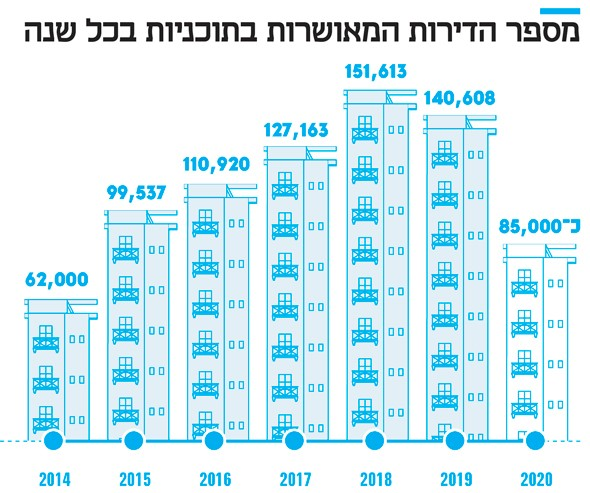
But even after the law is approved, the committee is expected to approve plans in the coming years with far fewer apartments than we are used to - because of the change in the nature of its activities. At the beginning of its path, it focused on plans for vacant land on which tens of thousands of apartments could be built. In 2019, it began focusing on urban renewal plans and plans in Arab localities - plans in built-up areas with a small number of apartments and requiring long-term care due to multiple barriers and disputes - and the new law reinforces this trend.