



The Marker, Hadar Horesh, 26.10.2020
Y. (43) is what the former finance minister, Moshe Kahlon, used to scornfully call an "apartment collector," one who likes to invest his savings in real estate. Far from the university, he bought the last apartment two years ago, in the C neighborhood, for NIS 980,000.
Y. does not believe in investments in the stock market. He financed the last apartment he bought in Be'er Sheva through equity in the amount of NIS 500,000 and a bank loan at a relatively favorable interest rate of 3.2%. The apartment is rented to a couple of students for NIS 2,500 a month. The annual return on rent on equity amounts to about 3% per year.
Y. relied mainly on the increase in the value of the apartment, which became very expensive in the years prior to the transaction. In the meantime, however, there is no increase in apartment prices, and Y. estimates that it will be difficult to sell an apartment in Be'er Sheva today at a higher price than the price he paid two or three years ago. In the meantime, it is left with a relatively low return, which hardly justifies the business risk and hassle. "I'm not selling yet, certainly not at a loss, but I have no plans to buy another apartment in the area," he says today.
Three years ago, I had reason to be optimistic: the state has promoted plans to move from the army camp to the Negev and the cyber center in Be'er Sheva, the establishment of another hospital in the city has been approved and the future looks promising. Small and large investors have invested in rental housing in the city, which has become the capital of investors. Some developers have built or renovated entire buildings, mostly for the fiery student market . The latest in the initiatives was by Wellcome Real Estate, a company owned by developers Adi Katzir and Doron Halva, which in the past two years has renovated a 20-apartment apartment for students in the C neighborhood.
In the last two years, however, the trend of rising apartment prices in Be'er Sheva has been halted, rental yields have fallen - and rental housing investors have begun to lower their profile. A price-per-tenant program flooded the southern region with thousands of apartments that met the demand in the young couples market, and the clearest sign of saturation was the repeated failures of the Israel Land Authority (RMI) tenders to market additional residential land in the city.
In recent years, the state has planned a large project of about 500 long-term rental apartments in the city . The project is to be built in cooperation with the Ministry of Defense, which intends to designate a significant portion of the apartments for permanent residents moving to the south as part of a plan to transfer IDF camps to the Negev. The government company "Apartment for Rent" is leading the project.
In addition, some of the major plans to move from the IDF camps to the south got stuck in bureaucratic disputes, and only recently did the IDF return to promoting the plan to move the Kiryat Modi'in to the south. While high-speed rail plans are progressing sluggishly, other cities in the southern region, such as Kiryat Gat, Ofakim and Netivot, have promoted accelerated development plans, supported by government benefits and threatening Beer Sheva's status as a southern metropolis.
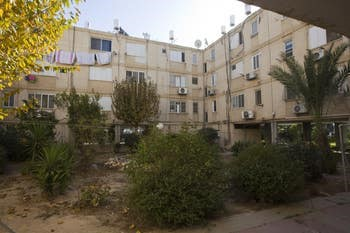 Sderot Shazar, Beer Sheva Photo: Eliyahu Hershkovitz
The students leave, and the market is not excited
This trend has worsened in the wake of the corona plague. Because students studying at Ben-Gurion University in the city, who make up more than 50% of the rental housing market , have suffered from job cuts due to the epidemic, many have returned to study zooming out of their parents' homes.
"In the immediate term, the neighborhoods that have been hit and are expected to be particularly hit by the crisis are student-oriented neighborhoods, especially C and D," says Ted Koppel, vice president of Madeleine, which is researching real estate market data. "Already today we see that more and more apartments in these neighborhoods are empty for rent, since it is not clear at all when students will return to practice within the walls of the university and not remotely. ".
However, Kopel estimates that "in the third quarter the picture balanced and investors return to Be'er Sheva, following the reduction of the purchase tax in July from 8% to 5% . "

Levy ItzchakPhoto: Ohad Bino
Shai Stern, director of the RE / MAX Plus real estate agency in Be'er Sheva, estimates that demand for rented apartments in the city has dropped by 30% due to the corona crisis, due to declining student demand. "We have an inventory of 198 apartments that we manage for investors who own apartments. We usually have almost no vacant apartments. Today we have 36 properties that do not currently have tenants," he says.
Unlike in the center, where students constitute a minority among the tenants, in Be'er Sheva, students constitute a very significant market. Most of the student apartments are small apartments in train houses in the old neighborhoods near the university, neighborhoods C, D, B and V. But many of the students prefer to live in new and larger apartments in the Ramot neighborhood in the north of the city. The newer neighborhoods also enjoy demand from families in need of rented housing.
According to Stern, "Part of the shortage in demand was filled by young couples benefiting from the decline in rents, and as a result, apartment prices in student-leaning areas fell by a similar rate." Despite the price declines and opportunities in the market, Stern says, he does not know investors who sold apartments at a loss: "Some investors felt they had exhausted the profit from the apartment they owned, sold and bought an apartment at bargain prices."
Tomer Bohbot, director of the Anglo-Saxon real estate agency in Be'er Sheva, says that despite the decline in rental yields, there is still strong demand from investors, who are willing to settle for reduced yields and benefit from the purchase tax reduction in July:
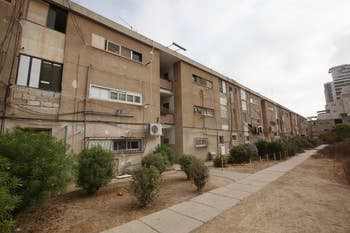 Neighborhood B, Beer Sheva Photo: Eliyahu Hershkovitz
According to Yoram Avisror, VP of the construction company Avisror & Sons, although there are claims of selling investors' apartments at a loss, there are no price reductions in the new apartment market in Be'er Sheva. "We are selling all the new projects well. "Investors have increased their activity in recent months, and in all projects, prices have risen during the construction period," he says.
According to him, the proportion of investors among home buyers in the company's projects has risen in recent months to more than 10%. The main demand among investors, he claims, is for four-room apartments, whose rent yields a higher return than for three-room apartments.
"The increase that buyers pay for another room is NIS 150-180,000. This allows another partner to enter the apartment for NIS 1,000-1,200 a month. The return on the additional investment can be 8% - double the return on regular rent in the city," says Avisror, adding that there is no There are still government housing rental projects in the city, but if there is a long-term rental housing tender, he will positively consider participation.
It has long been no "investor paradise"
In hindsight, Y. could have invested, for example, in the real estate index on the stock exchange, which has risen by 14% in the past two years. And decreased by 35% - while the residential construction index decreased during this period by only 20%.
Still, the last year the theory of the 'proved itself: while the stock market indices down, including measures of real estate of all types, keep the prices of apartments in Be'er Sheva and elsewhere almost stable. However, despite careful examination conducted by the Chief Economist at the Ministry of Finance two weeks ago found That 20% of the investors who sold their apartments in the second quarter in Be'er Sheva sold them at a loss, compared to a national average of 14%.
The Ministry of Finance estimated that the cause of the loss-making sales is the large number of investors who bought apartments in recent years and sold them under pressure, due to the economic crisis and fear of falling apartment prices. On the government real estate website you can find examples of selling apartments at a loss in the area, though not many. The cases we encountered were usually hard-to-sell apartments: small, old, top-floor with no elevator. The sale at a loss was spotty and does not necessarily indicate a market trend.
About two weeks ago we reported on a three-room apartment that was sold at a capital loss of 4% on Kalisher Street in the city, noting that given the rental income - the sellers received a modest return despite the sale at a loss. At 25 Dov Yosef Street in the city, a three-room apartment, 63 sq.m., was sold in July on the fourth and last floor of a building without an elevator for NIS 1.21 million. The apartment was purchased about four years ago, in April 2016, for NIS 1.56 million. 26% in four years.
One of the apartments included in the statistics of the Ministry of Finance is a three-room apartment at 27 King David Street: a tiny 33.5 sq.m. apartment, fourth and last floor in a building without an elevator, sold in June for NIS 507,000. The apartment was purchased less than four years ago, in January 2017, NIS 1,000, which means that the sale resulted in a capital loss of 5%.
Appraiser Levy Yitzhak presents additional examples of sales at a loss in the city: a three-room apartment on Rabbi Akiva Street, 55 sq.m., first floor, sold for NIS 642,000. The apartment was purchased in January 2019 for NIS 670,000. The buyer invested NIS 24,000 in renovation, brokerage And purchase tax, so that a total of NIS 694,000 was invested in it. The apartment was rented for 16 months during which it yielded the buyer NIS 35.2 thousand. Thus, the total income amounted to NIS 677.2 thousand, the expenses to NIS 644,000 and the loss amounted to NIS 16.8 thousand.
Yitzhak agrees that Be'er Sheva has long been not an investor's paradise: "The cheap apartments have attracted investors to Be'er Sheva. The return on investment reached a peak of 9%. . But prices have risen since then - and yields have fallen. The corona and online studies took the students out of the rented apartments, and brought them home. "The owners of apartments, most of whom cannot afford the mortgage payments because they are themselves unemployed or unemployed, have decided to sell the apartments."
Despite this, by all indications, Be'er Sheva will continue to concentrate interest among investors, mainly due to a relatively large supply of apartments for rent, stable demand and the expectation of rapid growth. The number of sellers of apartments at a loss has apparently increased - although this is still a marginal phenomenon in the strong market.